
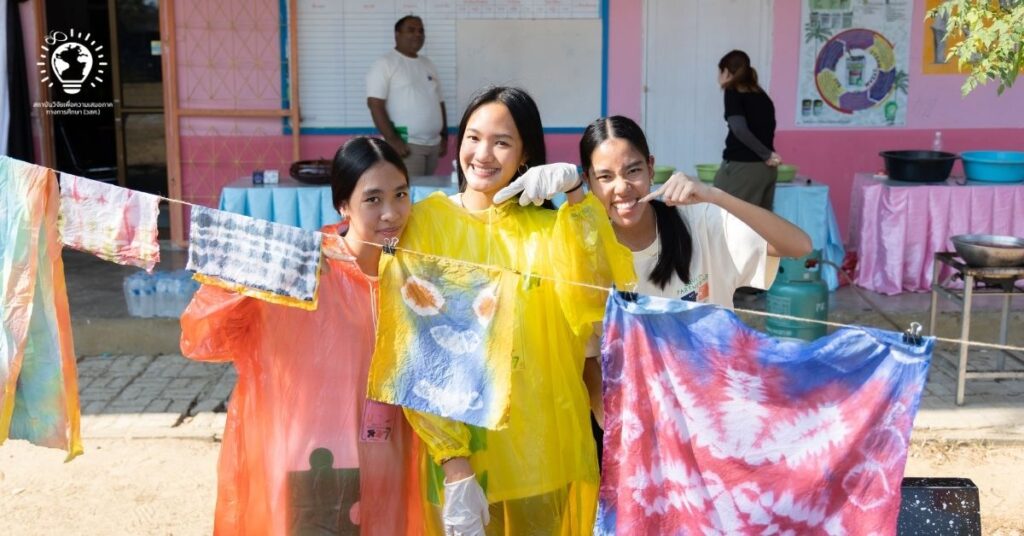
For some children, finishing grade 9 (secondary school) entails switching to a different classroom, school, or institution. But for many children from low-income and extremely low-income families, this transitional period is when their educational journey starts to stumble. Data from the Equitable Education Fund (EEF) shows that 31,028 pupils, or 18% of the 167,989 poor and extremely poor students who finished grade 9 in the 2021 academic year, had no record of continuing their education. By the 2025 academic year, only 21,921 students, or 13%, will have records of continuing their education at the university level through the TCAS system. These numbers show that even when many kids complete their required schooling, they lack a clear future, particularly between the critical ages of 15 and 18, when they must make important decisions about their careers, further education, and other aspects of their lives. Children’s prospects of reentering the educational system are greatly reduced when they leave during this time.
The problem, therefore, may not be that children ‘lack potential’ or ‘don’t want to learn,’ but that the education system doesn’t offer enough pathways for children to choose from and fails to connect learning to real life, their interests, abilities, and future opportunities. The crucial question, then, is not just how to prevent children from dropping out of the system, but how to create learning pathways that help children envision their future and feel that learning still has meaning in their lives.
From 2019–2025, the Equitable Education Fund (EEF), through the Equitable Education Research Institute (EEFI), developed process innovations through collaboration between schools for underprivileged children and international schools under the Equity Partnership’s School Network (EP) project. This aimed to create a learning model that provides students with opportunities to learn and develop their potential according to their aptitudes. This process did not limit learning to the classroom; it created spaces for students to explore and understand local cultural capital, build on it to design school ‘products,’ and develop entrepreneurial skills by selling products on online platforms, with all proceeds returning to the school. This process therefore gives students space to discover their potential, learn from real-world situations, and see the connection between what they learn, opportunities to generate income, and their future.
The project’s outcomes benefit not only students; they also create a space where teachers, students, and stakeholders collaborate to design, implement, and learn from real-world experiences, driving collective transformation. This transformation involves breaking free from conventional thinking, generating new ideas, discovering individual potential, and exploring possibilities through collaboration. This article explores how the project has created change for all stakeholders, from the teachers overseeing the project to the students participating, and invites reflection on the learning process that unfolds throughout the collaborative journey.
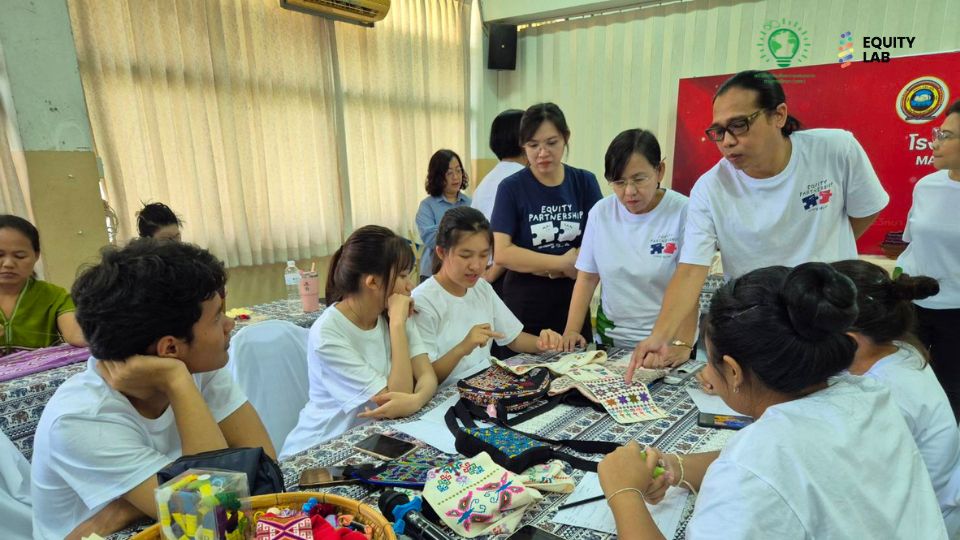
When Teachers Become ‘Students’ Again
While the Equity Partnership’s School Network project might seem like just another ‘workload’ for teachers, a closer look at the impact on participating teachers and students reveals significant benefits. Teacher Yui – Thatsuang Techakaew, the project supervisor from Mae Moh Wittaya School, reflects on the learning outcomes experienced by teachers through the project:
“Initially, I didn’t have high expectations. I thought the project would be like any other – completed, finished, with a result, and the project ended. But after participating in Partnership Season 6, I realized it was quite different.
The difference is that the project didn’t just deliver a final result; it fostered continuous learning throughout. We started by gaining foundational knowledge before beginning the work. However, during implementation, the challenges we faced, the skills we developed, and the knowledge from various disciplines we applied became integral parts of the learning process. Therefore, the most valuable aspect of this project isn’t just the final product, but the learning and growth that occurs throughout the entire process for both teachers and students. This is what sets this project apart from other projects we’ve had before.
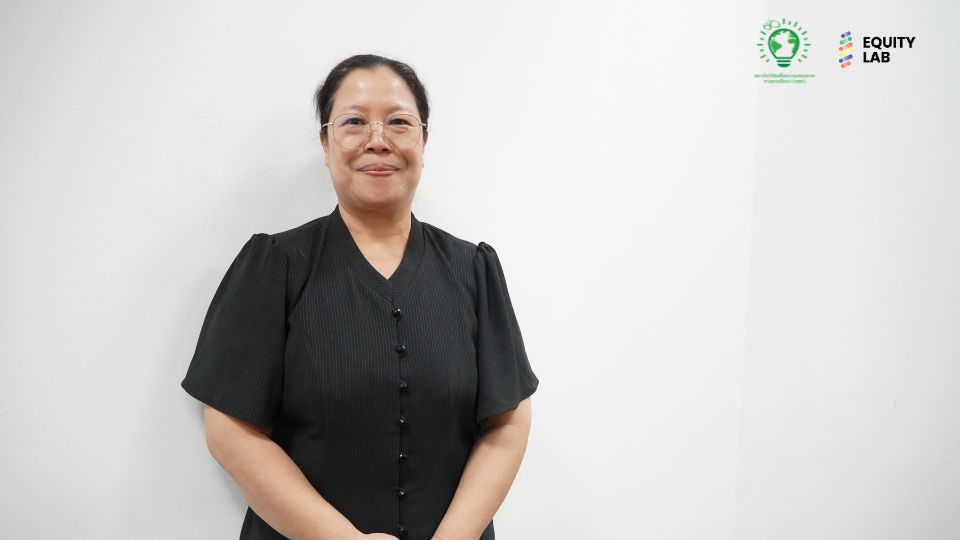
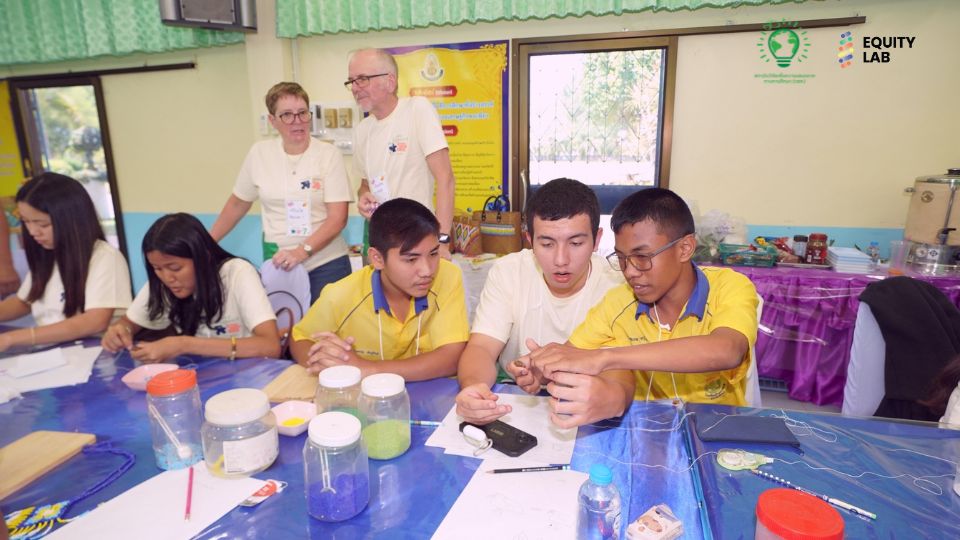
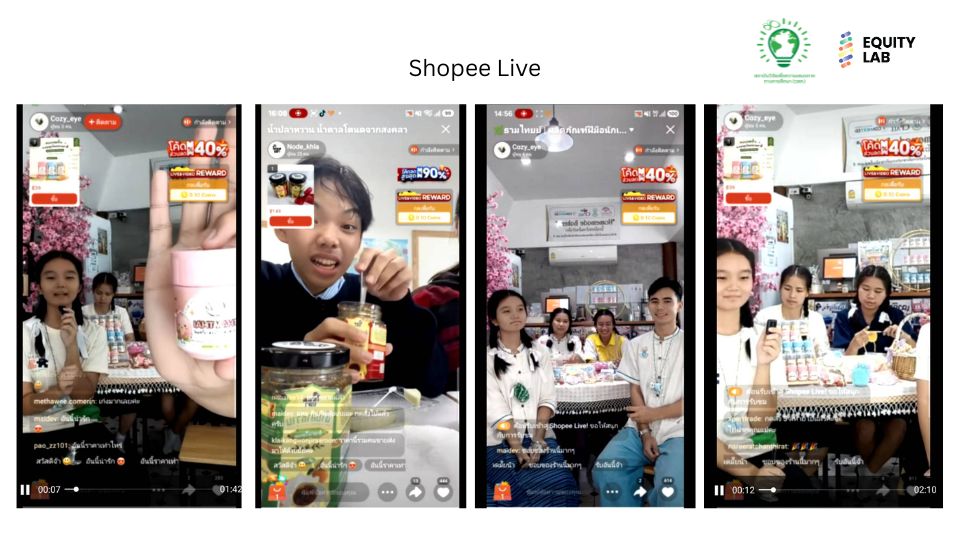
Thatsuang Techakaew, the project supervisor from Mae Moh Witthaya School, shared that this project has brought about changes to teachers in many dimensions. ‘Teacher Yui’ reflected on these results, saying teachers have stepped outside their traditional work frameworks and opened themselves to learning new things. Previously focused solely on classroom teaching, they have shifted to roles in research, knowledge-seeking, and continuous self-development. They also learned entrepreneurship on online platforms like Shopee, from taking attractive product photos and managing back-end systems to analyzing and comparing products with competitors—experiences they had never had before.
Furthermore, the project transformed teaching methods. Teachers integrated project-based processes into their vocational studies, shifting from simulating sales within the school with a limited customer base to exposing students to real-world situations, actual sales, real income generation, and problem-solving skills. Participation in the project also broadened teachers’ learning horizons through networks at Thammasat University and other educational institutions. This allowed teachers to break free from traditional work patterns, fostering idea exchange, brainstorming, and applying knowledge from diverse disciplines to their teaching and professional development.
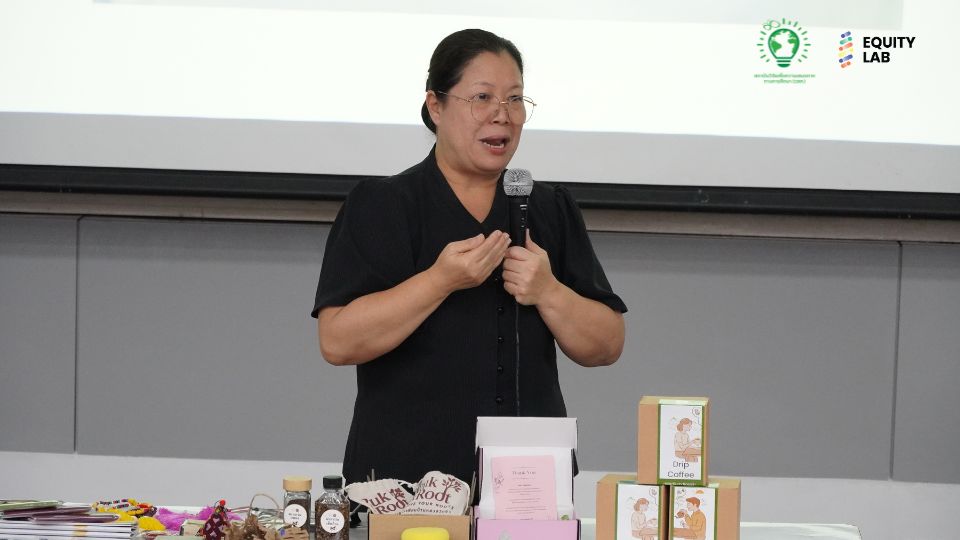
More than skills, what matters is the students’ ‘confidence in their potential.’
At the same time, ‘Teacher Yui’ has also observed positive outcomes for the students. The project has yielded results in many areas, particularly in developing 21st-century and entrepreneurial skills. This is achieved through learning analytical thinking, teamwork, and communication—important skills for life and future work. Furthermore, students have shifted from being online media consumers to “new-generation entrepreneurs” who can utilize technology and digital platforms like TikTok and Shopee to generate income for themselves.
“I believe the outstanding skills gained from participating in the project are critical thinking and analytical skills. However, the most important skill today is communication. In today’s society, communication is crucial. Participating in the project required students to extensively use communication skills in their work and various activities, skills that can be applied in daily life. Another skill that developed alongside this was entrepreneurial skills. Students learned how to be new-generation entrepreneurs, which requires knowing how to use various strategies and adapt to the modern world. These things will provide them with a foundation and initial experience, and after graduating from high school, they can use the foundation and experience gained from the project to develop or build upon in their studies, work, and lives.”
“In the 21st century, I believe confidence is key.” “Children first need to discover their own abilities and identity—what they like, what they’re good at, and their talents. Once they know and understand themselves, they can develop and build upon their existing skills in areas where they excel.”
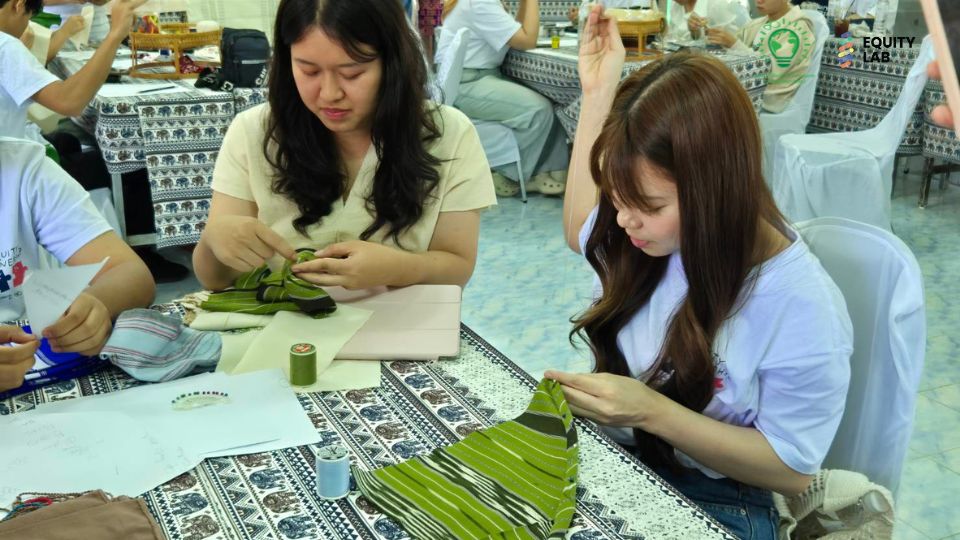
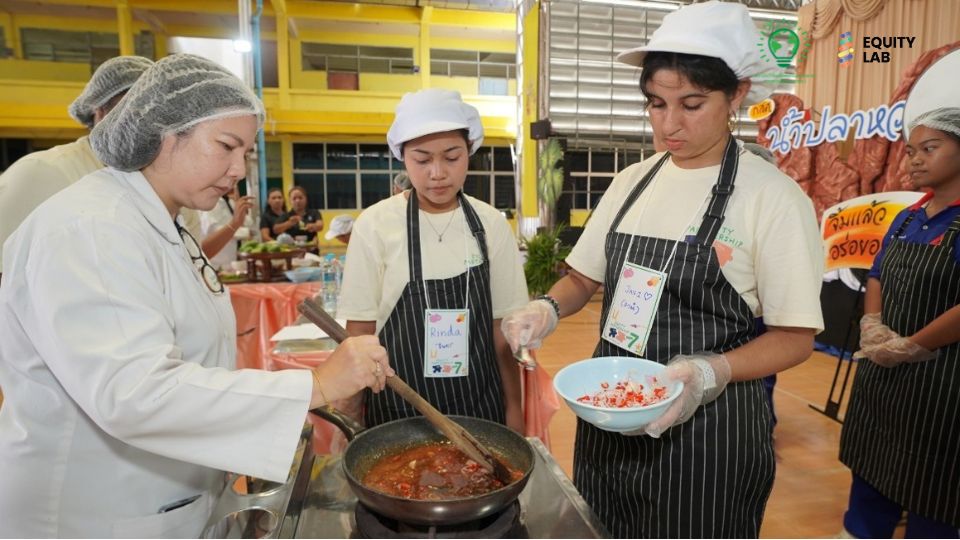
Hands-on experience in real-world situations helps students discover their hidden potential and build self-confidence. For example, some students discovered that when allowed to meet real customers, they could communicate and sell products in Chinese. Others discovered abilities in media production, cooking, or leadership. When their work is recognized and published in a local journal, it further boosts their pride and confidence in their own potential.
Student Reflections: Confidence and Self-Expression Skills and Future Career Paths
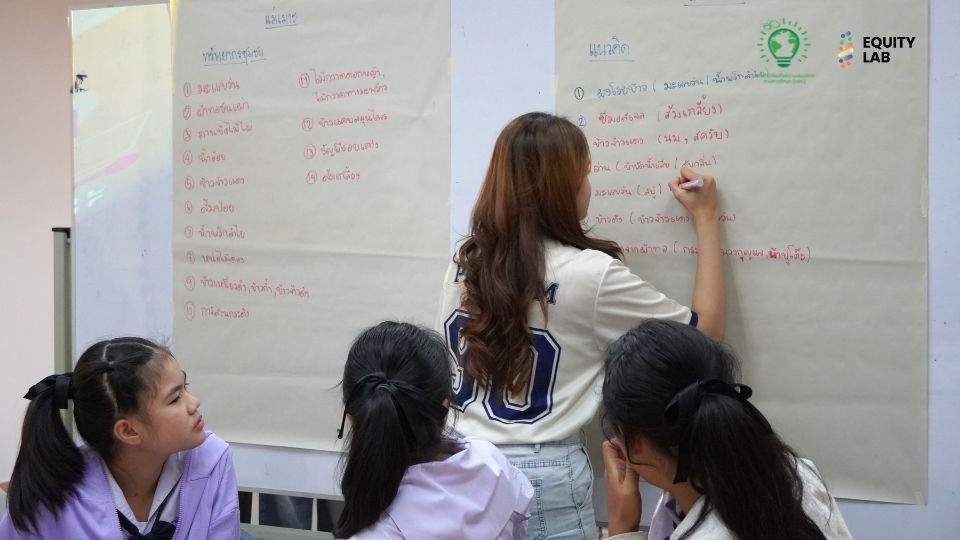
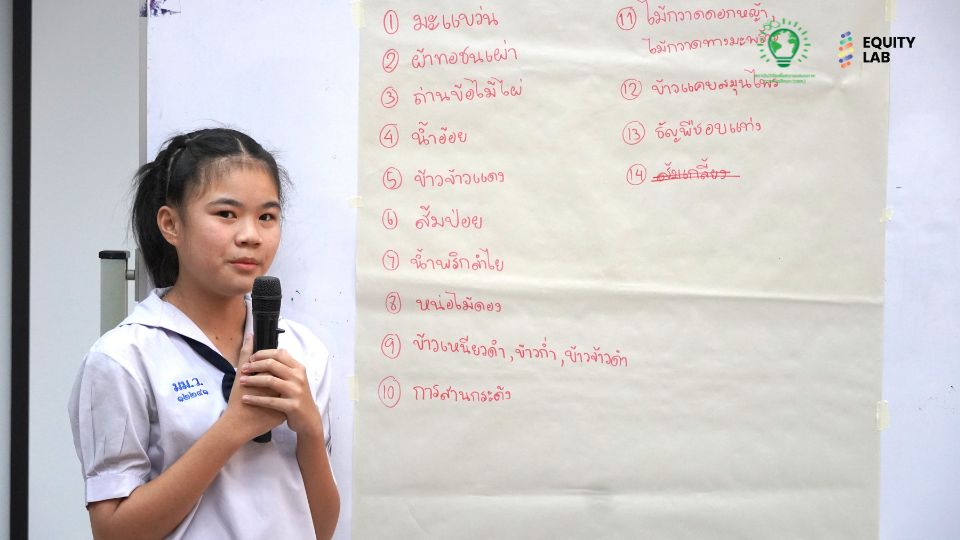
From the perspective of students Oern and Phueng, 5th-year secondary school students from Mae Moh Witthaya School, they reflect on what they gained from the project. They reported developing several skills, especially self-expression. Previously shy and hesitant to hold a microphone, they learned to communicate confidently with customers, present products effectively, and engage in conversation throughout the activity. They also learned business skills not taught in the classroom, such as cost calculation, inventory management, accounting, and selling products online through Shopee. Along with this, they developed important soft skills including communication, teamwork, and problem-solving – skills applicable to their future education and careers.
“I think the most valuable skill I gained was selling on Shopee, because our school didn’t teach us about online sales before. I also learned problem-solving skills; when faced with different situations, I had to stay calm and think before acting. In addition, I learned to work systematically and methodically.” “These skills can be further developed for both future business and studies,” one student reflected.
Another student commented, “I think I’ve gained improved communication skills. At school, we have fewer opportunities to communicate with people, but participating in booths and activities outside of school allowed me to meet more people. When customers ask questions, I have to think and answer quickly, which helps me practice problem-solving and gain many other skills from real-world work.”
Furthermore, students reflected that their increased confidence in public speaking partly stemmed from working with mentors from Thammasat University, Lampang Campus. This boosted their confidence in participating in activities. With continued participation, students became more confident communicating in front of a public audience. Another student reflected that they were not very outgoing at first. Still, after working and participating in activities several times, they realized that “if you’re always afraid, you won’t have the opportunity to do anything or showcase your abilities.” The experiences gained from the project have helped build confidence and enabled students to overcome their limitations more effectively.
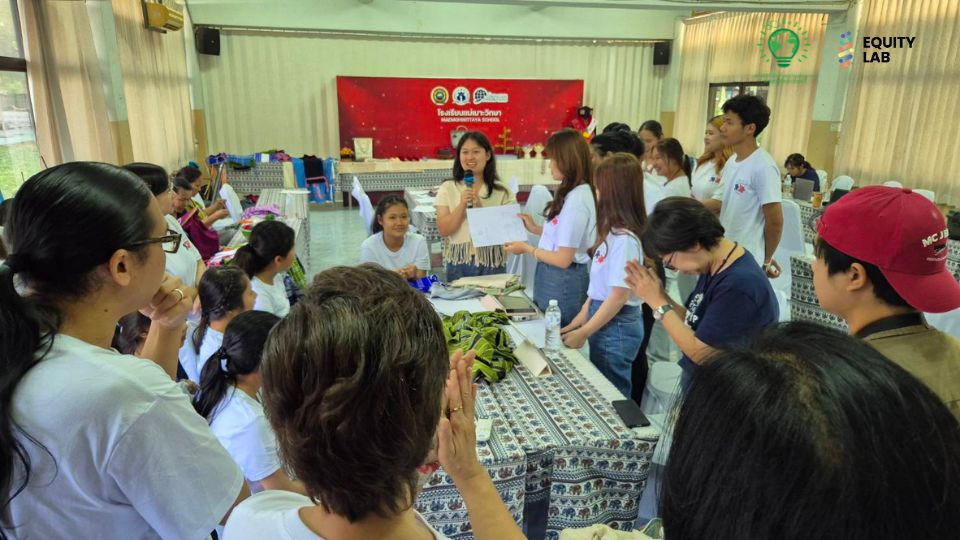
The project improves quality of life and helps prevent dropout by giving students opportunities to earn income through activities such as embroidery and harvesting and selling Makwaen (a type of spice). This allows students to save money and use their income for educational expenses. This impact is extremely significant. Because approximately 70% of the school’s students come from vulnerable families, earning income from the project is one mechanism that helps to improve their quality of life, reduce the risk of dropping out of the education system, and can be further developed into short-term vocational training courses for children who have already dropped out of school, so that they can become self-reliant.
However, the project’s most important outcome may not be the new skills or income students gain, but the fact that they begin to see career paths and life possibilities through real-life experience. Previously, learning may have seemed separate from daily life. By trying their hand at business, selling products, communicating with customers, and generating income themselves, students begin to see that their knowledge and abilities can be leveraged into future careers and income-generating opportunities. At the same time, the income generated can help ease their families’ financial burden and provide funds for further education. Thus, ‘career’ is no longer just about having a job after graduation, but becomes a vision of the future that children can design and create for themselves. These experiences may be a crucial starting point that helps students see the value of learning, recognize their potential, and begin to believe their life path has more options than they ever thought.
More than just generating income, it’s about creating ‘learning opportunities’.
Considering the core principles of the Equity Partnership’s School Network (EP) project, it’s clear that the project isn’t solely focused on creating activities for students or teachers to generate income or reduce financial inequality. Another crucial core principle is creating learning opportunities for students in schools with expanded opportunities or those from rural areas. This allows them to gain hands-on learning experiences. Feedback from teachers and students reveals an interesting point: the changes didn’t occur solely through classroom learning, but through authentic hands-on experience within the project. This can be explained by David Kolb’s Experiential Learning Theory and the 21st Century Skills framework, as follows:
1. Linking to Experiential Learning Theory (Experiential Learning Theory: Kolb)
Kolb (1984) explained that learning occurs through a four-step cycle: (1) Concrete Experience, (2) Reflective Observation, (3) Abstract Conceptualization, and (4) Active Experimentation.
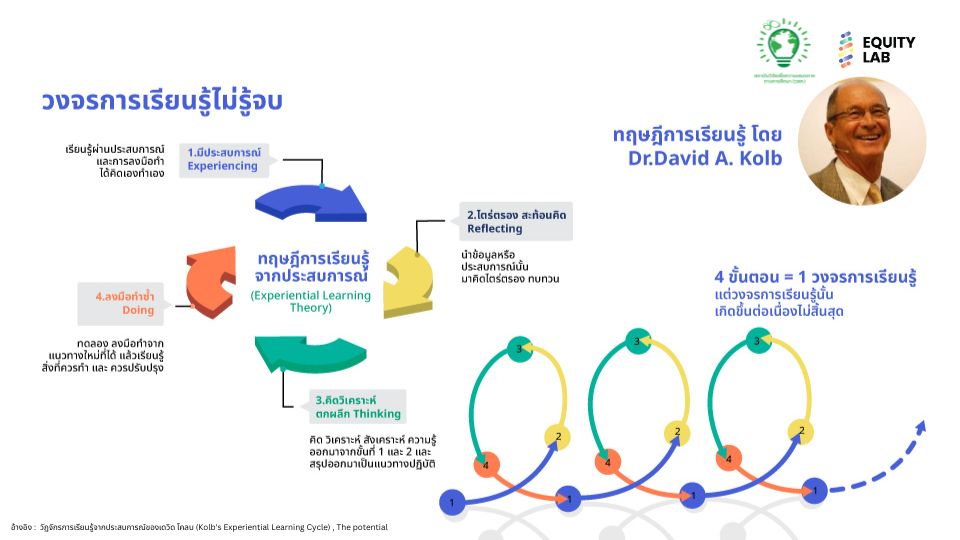
The students’ reflections clearly show this cycle. That is, students begin by learning, developing a product, and actually selling it, which is learning through direct experience (Concrete Experience). Then, when faced with real situations or work, students reflect on their experiences, such as realizing that “if you are afraid, you will not take action” (Reflective Observation), leading to the creation of a new understanding of their own potential and the importance of overcoming fear (Abstract Conceptualization), before using that confidence to communicate with customers, hold a microphone to present the product, and participate in subsequent activities (Active Experimentation). In other words, students’ assertiveness comes not from practicing speaking skills directly, but from real experiences communicating with customers, which lead to reflection and continuous self-improvement. This aligns with Kolb’s concept that students’ experiences are the primary source of learning.
2. Linkage to 21st Century Skills
Considering the project’s implementation through the lens of 21st Century Skills, it was found that the project did not focus solely on developing vocational skills or income generation, but also promoted the development of competencies essential for living and working in today’s world, including:
• Communication: Students developed communication skills through hands-on experience, such as communicating with customers, answering questions, and presenting products through various channels. This helped build confidence in communicating and expressing oneself to others.
• Collaboration: Engaging in activities with teachers, senior students, and peers allowed students to learn how to work with others (collaboration), including dividing roles, planning together, coordinating, and taking responsibility for team goals. This is a crucial skill for future work.
• Critical Thinking & Problem Solving: Real-life situations that arose during the project’s implementation. It gives students opportunities to practice critical thinking and problem-solving by facing unforeseen challenges, such as adapting sales strategies to customer needs, resolving immediate problems, and making decisions under time and resource constraints.
• Creativity & Innovation: Students also develop creativity and innovation through designing product presentation methods, producing promotional materials, creating online content, and adapting sales strategies to suit different customer segments. This helps students apply creativity to add value to products and meet market demands effectively.
• Self-direction and Growth Mindset: The program also significantly promotes self-direction in learning and the development of a growth mindset, as students reflected that, “If you’re afraid, you won’t do anything.” This finding reflects a shift from avoiding challenges to daring to try and fail, embracing new experiences, and learning from mistakes—key characteristics for students who can continuously develop themselves and form the foundation for lifelong learning.
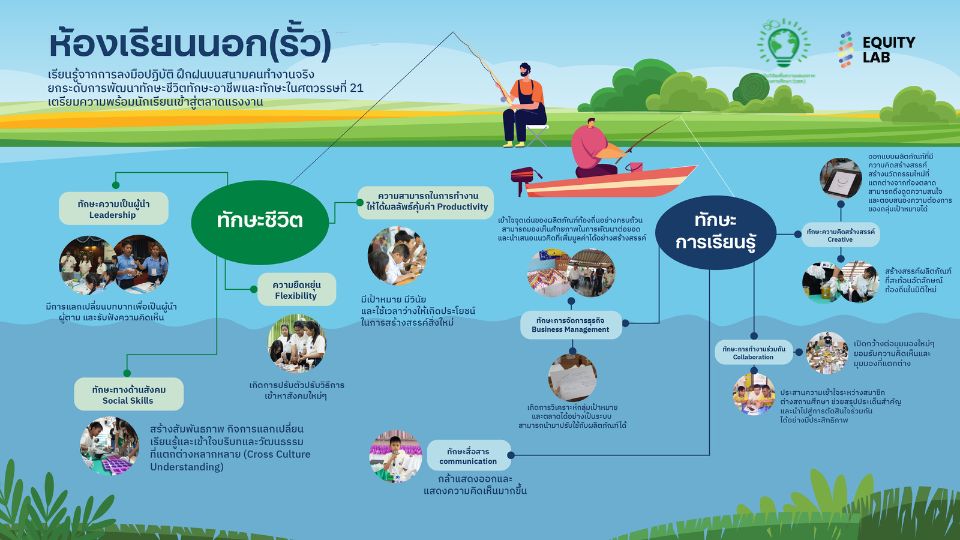
In addition to the aforementioned skills, conducting sales activities through the Shopee platform plays a crucial role in developing digital literacy. Specifically, students learn to use technology to create value, communicate with consumers, produce digital media, and manage online stores. At the same time, it builds entrepreneurial competency by covering business planning, cost calculation, pricing, market analysis, sales management, and revenue generation. This real-world business experience enables students to become more than just technology users; they can apply technology as a tool to create economic opportunities and improve their quality of life. This reflects the project’s ability to comprehensively develop essential 21st-century competencies in students, encompassing learning, work, technology use, and preparation for life in a rapidly changing world.
Conclusion: When Everyone is a Co-creator of Learning
Ultimately, the Equity Partnership’s School Network project is based on two core beliefs: All for Education and Education for All. Creating learning opportunities for students cannot be the sole responsibility of schools or teachers, and meaningful Education should not be limited to classroom knowledge. It should provide spaces for students to discover and develop their potential through real-world experiences.
All for Education therefore means inviting people from diverse sectors to partner in creating learning, from networks of international schools or universities working with schools to private companies like Sea (Shopee) providing knowledge and online sales tools. This collaboration creates learning spaces different from typical classrooms, allowing students to learn from real-world situations. At the same time, teachers, students, and stakeholders learn and transform alongside the students.
Education for All reflects the belief that all students should develop holistically, not just in subject-matter knowledge, but also in skills essential for life and future work. The project has clearly shown that hands-on activities develop a wide range of skills, including communication, teamwork, analytical thinking, problem-solving, creativity, self-expression, and entrepreneurial skills. Most importantly… It’s about students discovering their passions and talents and building on them to advance their studies or future careers.
Ultimately, the success of this project shouldn’t be measured solely by the number of products sold or the revenue generated, but by creating a space for students to actively participate, experiment, discover their potential, and envision their future possibilities. At the same time, everyone involved learns and grows together. This is the meaning of “All for Education,” where everyone participates in creating learning, and “Education for All,” where learning should provide opportunities for all children to develop their full potential.
credit
- Kolb, D. A. (1984). Experiential learning: Experience as the source of learning and development. Prentice-Hall.
- Partnership for 21st Century Learning. (2019). Framework for 21st century learning. Battelle for Kids.
Author